

-
Treatment Type
Cosmetic Surgery
-
Treatment Time
4–6 Hours
-
Anesthetic
General Anesthesia
-
Back to Work
1–2 Weeks
-
Total Recovery
4–6 Weeks
-
Duration of Results
10–15+ Years
-
# of Treatments
1
- Get Started and Try Our Treatment Planning Tool
-
Treatment Type
Cosmetic Surgery
-
Treatment Time
4–6 Hours
-
Anesthetic
General Anesthesia
-
Back to Work
1–2 Weeks
-
Total Recovery
4–6 Weeks
-
Duration of Results
10–15+ Years
-
# of Treatments
1
- Get Started and Try Our Treatment Planning Tool
Deep Plane Facelift in Chicago & Vernon Hills, IL
The Gold Standard in Facial Rejuvenation, Performed by Dr. Leonard Lu
The deep plane facelift is widely recognized as the most comprehensive surgical approach to facial rejuvenation available today. By working at the deepest structural layer of the face — below the skin and the SMAS — it addresses the root causes of aging rather than simply tightening the surface. The results are more natural, more complete, and significantly longer-lasting than traditional facelift techniques.
At RL Center for Cosmetic Surgery & Medspa in Vernon Hills, Dr. Leonard Lu specializes in the deep plane facelift and has performed this procedure extensively throughout his career. His goal with every patient is the same: you should look like a younger, more refreshed version of yourself — never operated on.
If you’ve been researching facelifts and want to understand why the deep plane technique has become the preferred approach for patients seeking real, lasting results, this page will walk you through everything you need to know.
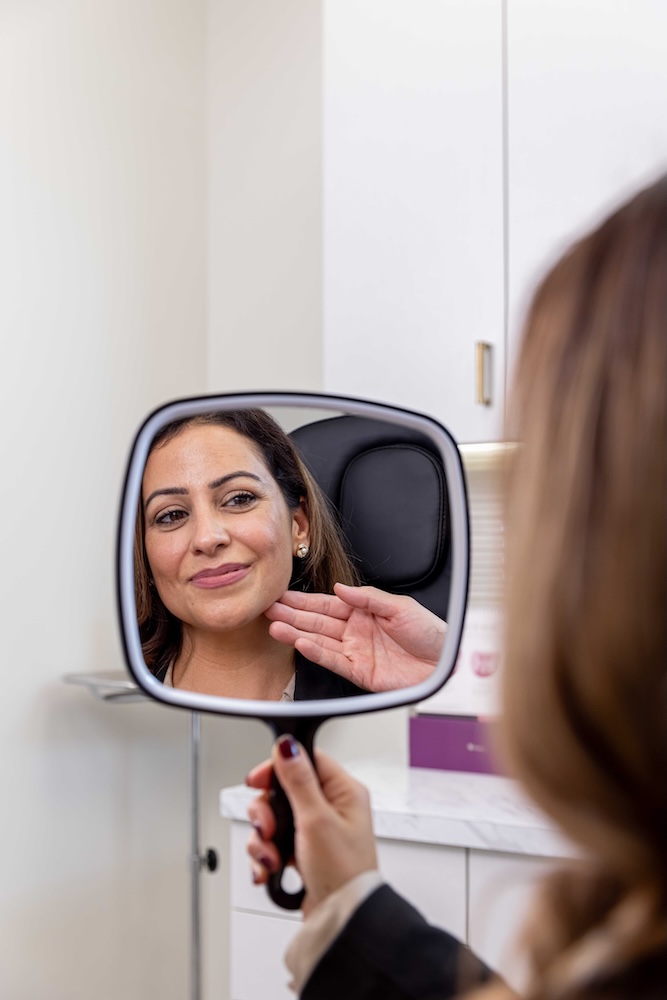
What Is a Deep Plane Facelift?
To understand the deep plane technique, it helps to know a little about the anatomy of facial aging.
As we age, the face doesn’t just lose volume — it descends. Gravity, weakening ligaments, and the loss of structural fat cause the tissues of the mid and lower face to shift downward over time. This produces the hallmarks of an aging face: flattened cheeks, deepening nasolabial folds, jowling along the jawline, and looseness in the neck.
Traditional facelift techniques address this by lifting and re-tensioning the skin and the layer just beneath it (the SMAS). While effective, these approaches don’t release the deeper ligaments that are actually responsible for the tissue descent — meaning results, while real, are limited in scope and longevity.
“The deep plane facelift releases the ligamentous anchors of the face, allowing the entire facial tissue composite to be repositioned — not just re-tensioned.”
The deep plane approach goes further. By dissecting beneath the SMAS layer and releasing the key retaining ligaments of the face — the zygomatic and masseteric ligaments — the surgeon can reposition the entire facial tissue composite as a unit. This means the fat, muscle, and skin all move together, restoring volume and contour naturally rather than creating surface tension.
The result: a face that looks genuinely younger — with restored cheek volume, softened nasolabial folds, a sharper jawline, and a smoother neck — without the tight, pulled appearance that older techniques could produce.

Deep Plane vs. SMAS Facelift: Understanding the Difference
Patients researching facelifts will often encounter several technique names. Here’s a plain-language breakdown of the most common approaches:
Skin-Only Facelift (Older Technique)
Works only on the outer skin layer. Creates temporary tightening but no structural change. Associated with the “windswept” look of older facelifts. Not performed at RL Center.
SMAS Facelift
Lifts and tightens the Superficial Muscular Aponeurotic System (SMAS) — the fibromuscular layer beneath the skin. A significant improvement over skin-only techniques. Produces natural results and better longevity. Well-suited for patients with mild-to-moderate facial aging.
Deep Plane Facelift
Goes deeper than the SMAS to release the retaining ligaments of the face. Repositions the entire facial tissue composite (fat, muscle, and skin) as a unit. Addresses midface descent, deep nasolabial folds, and jowling more completely than SMAS alone. Results are more comprehensive and longer-lasting. Best suited for patients with moderate-to-significant facial aging.
Which Is Right for You?
The best technique depends on your anatomy, your degree of aging, and your goals. Dr. Lu performs both SMAS and deep plane facelifts and will recommend the approach that delivers the best, most natural result for your specific situation during your consultation.
What a Deep Plane Facelift Treats
Because the deep plane technique addresses facial aging at its structural root, it can correct a broader and more complex range of concerns than surface-level approaches:
- Significant midface descent and flattening of the cheeks
- Deep nasolabial folds (smile lines) that no longer respond well to fillers
- Jowling and loss of jawline definition
- Marionette lines and lower face heaviness
- Neck laxity, loose skin, and platysmal banding
- Hollowing under the eyes and in the midface
- Overall loss of facial volume and contour due to tissue descent
- Asymmetry in the lower face caused by uneven tissue sagging
Deep plane facelifts are frequently combined with a neck lift, which addresses the neck and submental area in the same procedure through the same set of incisions. Other complementary procedures — eyelid surgery, brow lift, lip lift, and fat transfer — can also be performed simultaneously for comprehensive facial rejuvenation.

Are You a Candidate for a Deep Plane Facelift?
The deep plane facelift is best suited for patients who:
- Are experiencing moderate to significant facial aging — including deep folds, jowling, midface descent, and neck laxity
- Want the most comprehensive and longest-lasting surgical result available
- Are in good overall health with no conditions that significantly impair healing
- Are non-smokers, or are willing to stop smoking well before and after surgery
- Have realistic expectations and are seeking natural-looking rejuvenation
- Are typically in their mid-40s to 60s, though candidates in their late 30s or 70s can also be excellent candidates depending on anatomy
The ideal facelift candidate isn’t defined by age — it’s defined by anatomy, health, and goals. Dr. Lu will assess all three during your consultation.
Patients with earlier or milder signs of aging may be better suited to a SMAS facelift or non-surgical alternatives such as Sofwave, Ellacor, or injectable treatments. Dr. Lu will review all options with you and recommend only what is genuinely right for your situation.
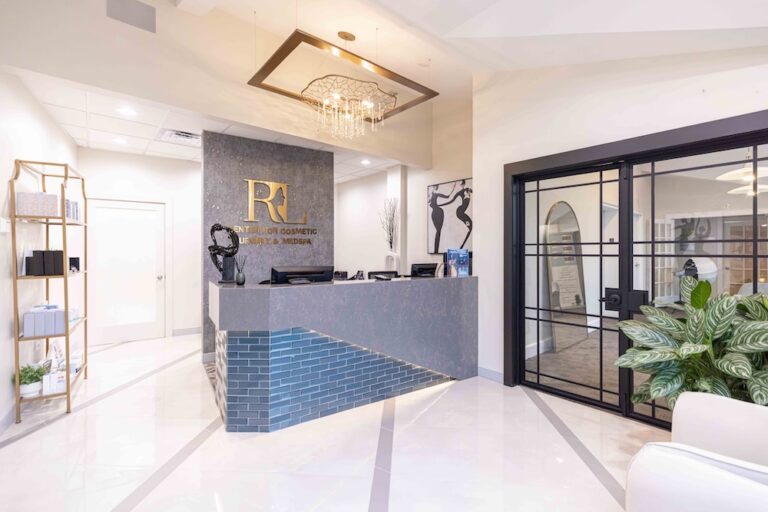
Why Patients Choose Dr. Leonard Lu for Their Deep Plane Facelift
Dr. Lu is a Board-Certified Plastic Surgeon with elite training from Brown University and Northwestern University, recognized for graduating at the top of his medical school class, extensive research contributions at leading institutions including Harvard Medical School, and years of experience in advanced cosmetic and reconstructive surgery.
Choosing a surgeon for a deep plane facelift is one of the most important decisions a patient can make. The technique is more complex than traditional approaches — requiring a deeper understanding of facial anatomy, greater surgical precision, and extensive hands-on experience to execute safely and beautifully.
Dr. Lu brings several key qualities to every deep plane facelift:
- Board certification — Dr. Lu is a board-certified plastic surgeon with specialized training in facial rejuvenation procedures.
- Deep plane expertise — Dr. Lu has performed this technique extensively and understands the nuanced anatomy required to achieve consistently natural results.
- A natural aesthetic philosophy — his goal with every patient is restoration, not transformation. You should look like yourself — just younger.
- Accredited surgical facility — all procedures are performed at RL Center’s accredited surgery center in Vernon Hills, IL.
- A collaborative approach — Dr. Lu works with each patient to understand their specific goals and anatomy before recommending any procedure.
The Consultation
Your deep plane facelift consultation at RL Center is a 40-minute, one-on-one appointment with Dr. Lu — not a front-desk intake or a nurse screening. There is a $100 consultation fee for surgical procedures.

During your consultation, Dr. Lu will:
- Review your facial anatomy, skin quality, and the degree of tissue descent
- Discuss your aesthetic goals in detail, including before-and-after photos for reference
- Walk you through the deep plane technique and how it applies to your specific anatomy
- Explain the risks, realistic outcomes, and recovery timeline
- Review your complete medical history, current medications, and any prior procedures
- Discuss pricing, financing options, and scheduling
- utline any complementary procedures that may enhance your overall result
You’ll leave your consultation with a clear, personalized surgical plan and a full understanding of what to expect before, during, and after your procedure.
The Deep Plane Facelift Procedure
Anesthesia
Deep plane facelifts at RL Center are performed under general anesthesia for patient comfort and safety. The procedure is performed on an outpatient basis at RL Center’s accredited surgery center in Vernon Hills.
Incisions
Incisions are strategically hidden in the natural anatomy of the face: beginning in the sideburn, continuing in the natural crease in front of the ear, around the earlobe, and into the crease behind the ear toward the lower scalp. When combined with a neck lift, a small additional incision is made beneath the chin. Placement is designed to be entirely concealed within the hairline and natural facial folds.
The Dissection
Dr. Lu elevates a skin flap and dissects beneath the SMAS layer — deeper than traditional facelift techniques. The key retaining ligaments of the face (zygomatic and masseteric ligaments) are carefully released, freeing the entire facial tissue composite to be repositioned. This is the defining step of the deep plane technique and what allows for such comprehensive, natural-looking rejuvenation.
Repositioning
With the ligaments released, the facial tissue composite — including fat, muscle, and skin — is lifted and repositioned as a single unit. The midface is restored to a higher, more youthful position. The jawline is redefined. The nasolabial folds are softened from within. The skin is then gently re-draped on top without tension, eliminating any risk of a pulled or tight appearance.
Neck
The platysmal muscles of the neck are addressed simultaneously — tightened and repositioned to create a smooth, defined neck contour. Excess fat beneath the chin can be removed at the same time if needed.
Closure
Incisions are closed in layers with fine sutures. The procedure typically takes 4–6 hours in total. Patients go home the same day with a supportive wrap around the face and chin.
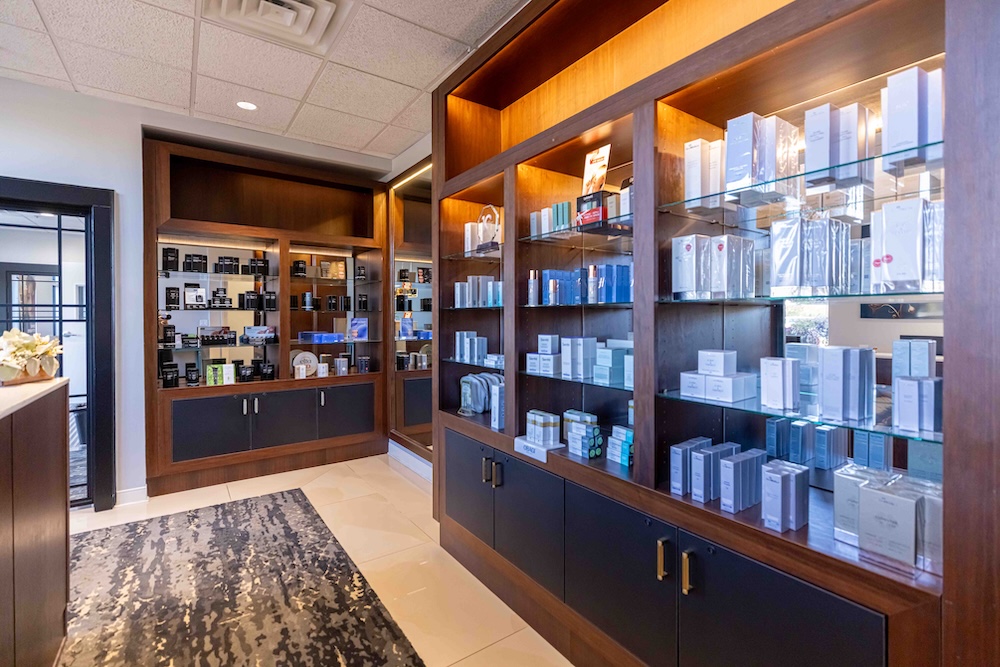
Get Started
Build Your Treatment Plan
Take a moment to use our Instant planner tool to receive personalized aesthetic treatment and/or surgical procedure recommendations based on your areas of concern.

Deep Plane Facelift Recovery
Recovery from a deep plane facelift is similar to a traditional facelift, though patients may experience somewhat more swelling in the first 1–2 weeks due to the deeper dissection. This is a normal part of the healing process and resolves fully.
Week 1
Your face will be wrapped with a supportive bandage around the chin to reduce swelling and bleeding. Rest is essential. Swelling, bruising, and tightness are normal. Sutures are typically removed around day 7. Most patients feel well enough to move around the house comfortably by days 3–4.
Weeks 1–2
Bandages can be worn only during sleep after the first week. Bruising fades significantly. Most patients are comfortable being seen in public by the end of week 2, though some residual swelling remains. Light activity is fine; avoid anything strenuous.
Weeks 2–4
Gradual return to normal daily activities. Avoid heavy lifting and vigorous exercise. Most patients return to desk work within 1–2 weeks and feel socially ready within 2 weeks.
6–8 Weeks
Cleared for full return to exercise including the gym. Heavy chest exercises should be avoided for up to 3 months.
3–6 Months
Final results become fully visible as residual swelling resolves completely and tissues settle into their new position. Scar maturation continues during this period.
Scar Care
Scars are managed with sunblock, massage, and silicone scar treatments beginning after suture removal. Because incisions are placed in the natural creases of the face and hairline, scars are typically inconspicuous within several months. Most patients feel comfortable wearing their hair up within 3–6 months without concern about visible scarring.
Combining a Deep Plane Facelift with Other Procedures
Facial aging affects every layer and zone of the face. A deep plane facelift addresses the mid and lower face and neck comprehensively — but many patients choose to combine it with additional procedures for full facial rejuvenation. Common combinations include:
- Neck Lift — almost always performed simultaneously with the deep plane facelift, addressing the neck and submental area through the same incisions.
- Eyelid Surgery (Blepharoplasty) — addresses upper or lower eyelid heaviness, bags, and fine lines that the facelift doesn’t reach.
- Brow Lift — repositions a descended brow and softens forehead lines for a refreshed upper-face appearance.
- Facial Fat Transfer — restores volume lost to aging in the cheeks, temples, and under-eye area using your own fat.
- Lip Lift — shortens the space between the nose and upper lip for a more youthful mouth area.
- Skin Resurfacing (HALO™, MOXI™, BBL HEROic) — improves skin tone, texture, and pigmentation after the facelift, typically 3–6 months post-surgery.
Dr. Lu will discuss which combinations make sense for your goals during your consultation and build a sequenced treatment plan accordingly.
Frequently Asked Questions — Deep Plane Facelift
Book Your Deep Plane Facelift Consultation in Vernon Hills
If you’re ready to explore whether a deep plane facelift is right for you, the next step is a one-on-one consultation with Dr. Leonard Lu. You’ll leave with a clear understanding of your options, a personalized treatment plan, and honest answers to every question you have.
RL Center serves patients from throughout the Chicago metro area, North Shore, and Northwest suburbs from our practice in Vernon Hills, IL.
Call (847) 367-8815 or request an appointment online.
RL Center for Cosmetic Surgery & Medspa
250 Center Dr STE 201, Vernon Hills, IL 60061
Mon–Fri 9am–7pm | Sat by appointment

Educating you is our first priority at RL Center.
Want updates on the latest cosmetic surgery techniques? Subscribe to the RL Center for Cosmetic Surgery & Medspa email list today. We promise to never sell your information.